To improve employee satisfaction with health benefits without increasing premium costs, make the plans you offer easier to choose and use. Show what each plan will cost employees in dollars, help each person pick the plan that fits their expected care, answer coverage questions all year, and measure employee benefits satisfaction before and after you make these changes.
Key takeaways
- Workers’ contributions to family premiums rose 9% in 2026, while wages rose 3.7%, according to KFF’s 2026 Employer Health Benefits Survey.
- Many employees can’t predict what they’ll pay for care: only 36% say they know all the details about their potential out-of-pocket medical costs, according to New York Life’s 2026 survey.
- Plan guidance should compare each employee’s estimated yearly cost, meaning premiums plus likely out-of-pocket costs, because 54.56% of employees using Healthee’s Decision Support Tool expected medium to high medical needs for 2026, according to Healthee’s 2026 Benefits Divide report.
- Half of employees think about benefits mainly during open enrollment, according to New York Life’s 2026 survey, but their coverage questions come up at the doctor’s office and when the bill arrives, so support has to run all year.
- HR can measure how satisfied employees are with their benefits by pairing a short survey after open enrollment with behavior signals, like how many employees compared plans and how many coverage questions reach HR.
Why does employee benefits satisfaction drop when costs rise?
Benefits satisfaction drops when costs rise because employees pay more for coverage and often don’t know what they’ll owe when they use it.
In 2026, workers paid an average of $7,471 toward family premiums. That’s up 9% from 2025, while wages rose 3.7%, according to KFF’s 2026 Employer Health Benefits Survey. For 2027, employers expect health benefit costs per employee to rise 8.2%, the biggest jump since 2003. And 59% plan cost-cutting changes such as higher deductibles, according to preliminary results from Marsh (formerly Mercer). So even if premium contributions stay flat, a higher deductible means employees pay more when they get care.
Many employees also don’t know what that care will cost. Only 36% say they know all the details of their potential out-of-pocket costs, according to New York Life’s 2026 benefits survey. Only 57% fully understand what their benefits cover, according to MetLife’s 2025 Employee Benefit Trends Study. For everyone else, the bill is the first time they find out.
This affects retention. MetLife found that employees who understand their benefits and are satisfied with them are 1.4 times more likely to feel engaged at work. New York Life found that half of workers would stay longer with stronger benefit options. If the budget can’t cover new options, HR can use these findings to make the case to finance for helping employees get more out of the plans they already have.
Better communication, plan guidance and year-round support won’t lower premiums. Plan design and steering employees toward lower-cost care do that, and our guide to reducing healthcare costs for employers covers those options. With better support, employees see what their plans are worth and choose the plan that fits the care they’ll use, which can lower what they pay out of pocket.
How should HR communicate benefits changes when costs go up?
Communicate a cost change in dollars, and include the reason it happened. A line like “the deductible rises from $2,000 to $2,500” leaves employees to work out what the change costs them. In MetLife’s 2025 Employee Benefit Trends Study, 72% of employees want their employer to provide benefit communications tailored to their needs.
You can tailor one announcement to your whole workforce with 3 or 4 examples, such as:
- A single employee who sees a doctor twice a year
- A family with young children
- Someone managing a chronic condition with monthly prescriptions
For each plan, show what each example pays in a year: their share of the premium, plus what they’d likely pay out of pocket for the care they use. This raises satisfaction because employees find the example most like them and see roughly what they’d pay.
Then say why costs changed and how much of the increase the company is paying.
For the timeline and channels to send this type of communication through, see our open enrollment communications guide.
How does personalized plan guidance improve benefits satisfaction?
Personalized plan guidance improves satisfaction because it helps each employee choose a plan by what they’d likely pay in a year for the care they expect, rather than by the premium or by last year’s choice.
The premium isn’t the right guide for all employees. During enrollment for 2026 plans, 54.56% of employees using Healthee’s Decision Support Tool said they expected medium to high medical needs in the coming year, according to Healthee’s 2026 Benefits Divide report. For those employees, the deductible and the out-of-pocket maximum (the most they’d pay in a year for covered care) matter more than the premium.
The number that answers “which plan is cheapest for me?” is the estimated yearly cost: employees’ premium contributions plus what they’re likely to pay for the care they expect. A decision support tool compares plans against each employee’s own expected care and costs.
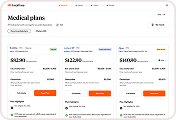
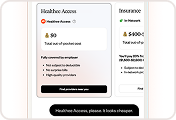
In Healthee’s Decision Support Tool, employees answer an intake about who they’re covering, the care they expect, the doctors they see, and whether they mind needing referrals. Zoe, Healthee’s AI benefits assistant, then suggests the top 3 plans, each with an estimated yearly cost. Each plan also shows a best case, the premium alone, and a worst case, the out-of-pocket maximum plus the premium. A providers filter shows which plans include their doctors, and employees finish enrolling in your benefits administration system.
Why does year-round benefits support improve satisfaction?
Year-round support improves satisfaction because employees use their benefits and run into coverage questions even after open enrollment closes.
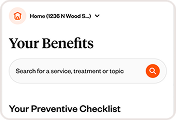
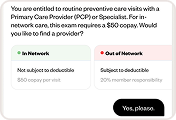
Half of employees think about benefits mainly during open enrollment, and just 15% think about them throughout the year, according to New York Life’s 2026 survey. Their questions come later as they need to use their benefits: whether an MRI is covered, which urgent care is in network, why a bill is higher than expected. When the answer takes days or has to come from HR’s inbox, the plan feels harder to use than it is. But when it comes instantly from an AI-powered benefits assistant that knows the employee’s specific plan, that’s when employee satisfaction improves.
Employees still want a person for some of those moments. In New York Life’s 2025 survey, 54% preferred human support when resolving a billing or claim matter, and fewer than 10% wanted AI-only support. So use AI for routine coverage questions at any hour, and route billing and claims questions to people.
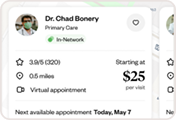
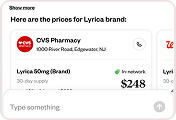
Zoe answers coverage and cost questions 24/7 from each employee’s own plan, in the Healthee app or in a private chat in Slack and Microsoft Teams. According to Healthee data, Zoe resolves 95%+ of routine questions. For employers with live chat turned on, she hands claims questions, and anything else she can’t answer, to a human benefits specialist.
How do you measure benefits satisfaction?
Measure satisfaction with a short survey after open enrollment and again mid-year, paired with 2 or 3 behavior signals that show whether employees understand and use their plans.
For behavior signals, pick from:
- The share of employees who compared plans before choosing one
- Coverage questions reaching HR each month, which should fall as answers get easier to find
- Use of programs you already pay for, such as mental health or physical therapy benefits
Keep the survey to 3 to 5 questions, ask the same ones each time so the answers compare, and add them to any survey you send after open enrollment instead of starting a new one. Our list of post-open enrollment survey questions has more to choose from.
Surveys capture how people feel on the day they answer, and response rates vary. The behavior signals cover that gap, because they don’t depend on who answers.
Make benefits easier for you and your employees
When rising costs limit what you can add to your benefits, you can still make the plans you have more useful to employees. Employees can be more satisfied with their benefits while the premium budget holds, when they see their costs in dollars, choose a plan by the care they expect, and get answers when the bill arrives.
Satisfaction matters more in an expensive year, because the employees feeling the increase are the ones deciding whether their benefits are worth staying for. Healthee, an AI-powered benefits platform, helps employees choose, understand, and actually use their benefits. One medical equipment company using Healthee saw an 86% boost in user satisfaction.