Brokers and benefits consultants help reduce healthcare costs by finding the spend that employees’ everyday decisions drive, cutting point solutions employees don’t use, and keeping employees on the plan’s lower-cost options all year. Benefits consultants then show the result at renewal with each client’s own numbers, measured against a baseline set at the start of the plan year.
Key takeaways
- In data from Healthee members in 2026, the AI-powered benefits platform, the 45% of members who spend $1.4K to $30K a year drive 47.5% of healthcare spend, through everyday care decisions they can change
- A benefits consultant can show a client results at renewal before a full year of claims data is in, by reporting employee usage each month and adding claims spend once that data arrives
- More employers rate broker guidance on healthcare cost management as very important (89%) than say their broker fully delivers it (69%), according to Zywave’s 2026 Broker Services Survey, as published by Insurance Edge
How do benefits brokers help clients lower healthcare costs?
Brokers and benefits consultants help clients lower healthcare costs by finding the part of spend that employees’ decisions can change and cutting programs clients pay for that employees don’t use. That work gets more urgent each year, because employer healthcare costs keep rising for companies and their workers.
Total annual premiums for family coverage now average $28,303, up 5% from 2025, and workers pay $7,471 of that, up 9%, according to KFF’s 2026 Employer Health Benefits Survey. In the same survey, 44% of large firms (200 or more workers) said they increased the share of the premium workers pay to address higher projected health costs, and 21% said they increased deductibles or other cost-sharing for most services.
Shifting cost moves the bill to employees without changing what their care costs, and employers expect their consultant to offer more than that. In Zywave’s 2026 Broker Services Survey of more than 1,400 US respondents, as published by Insurance Edge, 89% of employers rated broker guidance on healthcare cost management as very important, but 69% said their broker fully delivers it. A client that expects cost savings and doesn’t see them may look at other consultants at the next RFP. A consultant who can show where the client’s costs changed gives that client a reason to stay.
1. Find the spend that decisions can change
Many vendors tell clients they’ll save money, so a consultant first needs to know which part of a client’s spend can come down. 2026 member data from Healthee, splits healthcare spend into three groups:
| Members spending |
Share of members |
Share of spend |
| Under $1.4K a year |
50% |
About 3% |
| $1.4K to $30K a year |
45% |
47.5% |
| $30K or more a year |
5% |
49.7% |
Much of the top group’s spend goes to necessary care, like cancer treatment, chronic conditions, and premature births, and navigation can’t make that care cheaper. The bottom group has little cost to take out. The middle group is where brokers can make a difference, because those members’ spend comes from ordinary decisions about MRIs, specialists, prescriptions, and procedures, which employees can change.
Before renewal, ask the client for a year of claims spend split at the same two cut points, $1.4K and $30K, so you can see how much of its spend sits with the middle group.
2. Cut the point solutions employees don’t use
Clients often pay for programs employees never open. According to Healthee, most employers already pay for 5 to 8 point solutions, meaning separate vendors that each cover one need, such as mental health or physical therapy. In The Hartford’s 2025 Future of Benefits Study of 701 employers and 1,000 US workers, 75% of employers said the benefits they offer are underutilized.
An unused program still costs money, because a point solution billed PEPM costs the same whether 10 employees open it or none do. A client can drop some programs when a single product covers the same needs. Healthee typically replaces 2 to 4 point solutions. Each program the client drops is also one fewer app for employees to keep track of, which eases point solution fatigue.
A point solution audit is one of the simplest places to find savings, because it doesn’t require changing the medical plan. Before renewal, list every point solution the client pays for, with its PEPM fee and how many employees used it in the last 12 months. For plan design, network, and claims levers, see ways consultants can reduce benefit renewal costs.
How can benefits brokers add tech value to clients beyond plan selection?
Benefits consultants add value beyond plan selection by bringing clients technology that employees use after open enrollment, when they’re choosing care and spending money. Employees pick a plan once a year, but they make the everyday care decisions that drive the middle group’s spend over the other 11 months. Most decision support tools compare plans against each employee’s expected care and costs, then go unused until next year.
Clients now judge consultants on technology as well as advice. Zywave’s 2026 Broker Services Survey, reported by Insurance Business, found that for the first time, failing to adopt modern technology and AI tools ranked among the top eight reasons employers would switch brokers.
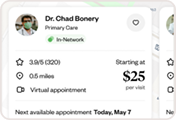
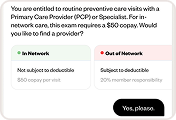
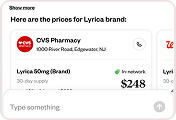
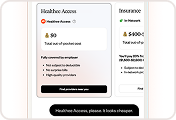
Give employees an AI assistant that answers from their own plan when they need care. In the Healthee app, employees can ask Zoe, Healthee’s AI benefits assistant, questions like “How much will an MRI cost me?” or “Do I need a referral for physical therapy?” Zoe answers based on their enrolled plan, their employer’s setup, and their eligibility. When a lower-cost, high-quality provider is nearby, Zoe suggests that provider first. Steering employees to lower-cost care during the year is a big part of keeping client spend down, since those everyday choices drive most of the spend.
According to Healthee, Zoe resolves 95%+ of routine questions, so fewer reach the HR or account team.
Questions to ask any benefits AI vendor:
- Does it know the employee, their plan, and their history?
- Does it only answer questions, or can it take action?
- Is it easy for employees to reach, or one more tool to remember?
- Does it meet accredited standards and use verified data?
How can a benefits consultant show ROI to employer clients at renewal?
A benefits consultant shows ROI at renewal by agreeing with the client on measures and a baseline at the start of the plan year, then reporting usage and cost against that baseline. Usage is the leading indicator, because it shows each month whether employees use what the client pays for. Cost lags, because claims data arrives well after employees get care. Together, they turn a broker’s work on healthcare costs into numbers the client can check.
The renewal report should cover:
- Baseline: claims spend by member band and point solution PEPM fees at the start of the plan year
- Usage: how many eligible employees registered, activated, and used the tools each month
- Behavior: what employees asked about and did next, such as searching for care or booking a visit
- Cost: point solutions cut and their PEPM fees, plus claims spend against the baseline once claims data is in
For the cost measures that finance teams use, see our guide on health plan metrics CFOs track.
Get the usage data from the client’s HR team
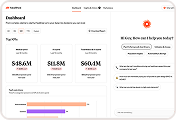
The engagement dashboard in Healthee Pulse shows how many employees are eligible, registered, activated, and active each month. It also shows what employees asked Zoe and did right after (viewed benefits, searched for care, viewed providers, or booked telehealth), plus provider searches and bookings.
HR can compare 1, 3, 6, or 12 months against the previous period and export selected sections as a PDF, DOC, XLS, or CSV for the renewal meeting. Zoe adds plain-English highlights at the population level and never identifies individual employees.
Keep the dashboard’s limits in mind
The Healthee Pulse dashboard reports engagement, and the current month is always partial. Its telehealth section includes an estimated avoided cost, so label that line as an estimate. Clients with only the Decision Support Tool don’t get this dashboard. Instead, they get an open enrollment summary that shows how employees used the tool, from first click to saved plan.
When claims data shows a change, report it as that client’s result for the period it covers. The same goes for other companies’ results. For example, one technology company using Healthee cut claims spend by $214K.
At renewal, a consultant with a usage and cost report can show the savings and usage gains with the client’s own numbers. A competing consultant’s RFP response can only promise results.
A renewal checklist for benefits consultants
Start the renewal conversation at least 3 months before the renewal date. According to Zywave, “many employers want renewal conversations to start at least three months out, with many preferring six months or more.” Starting early gives you time to walk the client through what you saved them before they start comparing quotes.
Have these ready for the first conversation:
- Claims spend for the year, split by member band
- Every point solution with its PEPM fee and usage, and the ones to cut
- The baseline you set with the client at the start of the plan year
- The engagement report from HR, covering the same period as the baseline
- Every result labelled measured or estimated
- The features the employer has turned on in any AI assistant you bring
- Answers to the 4 questions for any benefits AI vendor you’re considering
- One question for the client about the technology and AI tools it expects from its consultant
Make benefits easier for your clients and their employees
Brokers and benefits consultants help reduce healthcare costs when they find the spend employees’ decisions can change and keep employees making lower-cost choices all year. Consultants who also show what changed, with each client’s own usage and cost numbers against a baseline, give clients a reason to stay and go into the next RFP with results instead of promises.
Healthee, the AI-powered benefits platform, helps benefits consultants do both. Zoe suggests more affordable providers to employees all year, and HR gets the engagement report you bring to renewal.