More than 40 million people ask ChatGPT healthcare questions every day, which means consumers are frequently turning to chatbots to help navigate the US’s complex healthcare system.¹
Roughly 1.5 million to 2 million of those questions are asked about health insurance each week, including how to compare health plans, handle claims and billing, and understand prices. Right now, some of your employees are typing their benefits questions into a general-purpose AI tool.
They’re asking things like, “Is my therapist in-network?” “How much have I met toward my deductible?” “Does my plan cover fertility treatments?” And they’re getting answers. Just not necessarily the right ones.
Generic AI chatbots are impressive. They can synthesize vast amounts of information, explain complex concepts, and communicate clearly. But when it comes to your employees’ specific benefits situation—their plan, employer-sponsored point solutions, deductible status—those tools are operating without the most important piece of the puzzle: actual knowledge of your benefits program.
In this blog, we’ll cover the financial risk of employees turning to generic AI for benefits answers, and what your HR team can do about it.
Generic AI doesn’t know the full scope of your benefits
Some people upload plan documents to AI tools to give them context and produce more accurate responses. But most generic AI tools operate like highly sophisticated chatbots. They can reference documents, but they still lack access to the dynamic information employees need to make decisions.
It doesn’t know that your employee already spent $800 toward their deductible. It doesn’t know that your company added a mental health platform as a point solution in Q2. It can’t definitively tell someone whether a specific provider is in-network, because network data changes constantly.
On top of that, it has no awareness of the other benefits your company offers, such as an Employee Assistance Program (EAP), HSA contribution, fertility benefit, or caregiver support platform. What if one of those would’ve made a huge difference in your employees’ benefits journey?
What employees end up getting is general information dressed up as a personalized answer. These interactions will cost both you and your employees a considerable amount of time and money.
The true cost of an inaccurate benefits answer
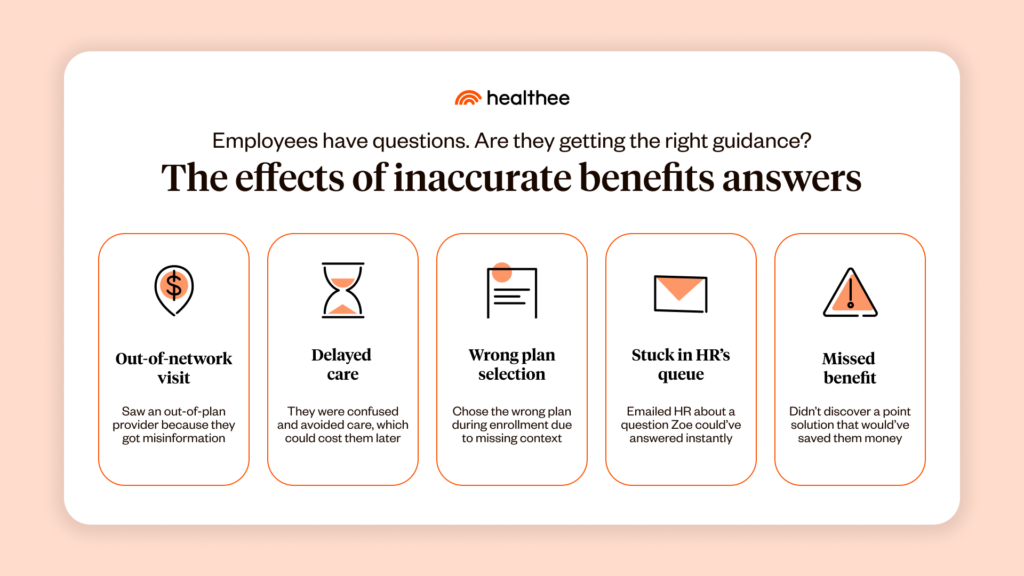
When an employee gets incomplete or incorrect information about their benefits, it not only confuses but also encourages them to make potentially harmful decisions.
For example:
- They see an out-of-network provider because they weren’t sure how to find one in-network.
- They delay care because the chatbot’s answer was ambiguous and they didn’t want to pay out of pocket.
- They enroll in the wrong plan during open enrollment because they didn’t understand the trade-offs for their specific situation.
- They email HR, which costs time on both ends, to ask a question that they could’ve easily found with the right guidance.
- They miss a point solution benefit entirely because no one connected the dots for them.
Each of these outcomes has a cost attached to it. Avoidable out-of-network bills. Under-utilized benefits that your company paid to offer. Employer contributions that go unused because employees didn’t know they existed.
Generic AI doesn’t know what it doesn’t know. To make matters worse, a lot of these chatbots tend to hallucinate—meaning they confidently generate false, misleading, or completely fabricated information.²
General-purpose AI is extremely risky in a benefits context because its responses are extensive and sound “correct enough” that employees don’t question them. But the bigger challenge is that benefits decisions rarely depend on a single piece of information.
Employees often need to weigh multiple factors at once: coverage, provider availability, costs, employer-sponsored programs, and their own healthcare needs. Generic AI can explain each of those factors separately, but it doesn’t usually evaluate them together and guide employees toward the best next step.
What benefits-specific AI actually looks like
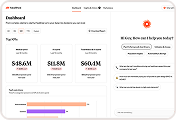
Zoe, Healthee’s AI benefits assistant, is designed differently from a traditional chatbot. Rather than simply retrieving information, Zoe functions as an intelligent benefits system that combines multiple sources of information:
- Your specific plan documents and coverage details
- Real-time network and provider data
- Your company’s full benefits ecosystem, including vendors and point solutions
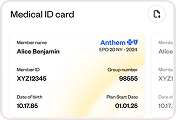
- Each employee’s individual benefits data, such as deductible progress, HSA balances, and enrollment elections
Zoe evaluates that information in context before presenting a recommendation that makes sense for the employees. What does that look like in practice?
Let’s say an employee asks, “What are my mental health therapy options?”
A generic AI tool may explain common therapies, list local offices, and suggest contacting the carrier to verify coverage.
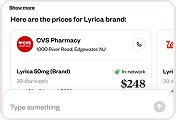
An intelligent benefits system takes the next step. It can evaluate the employee’s available benefits, identify relevant employer-sponsored mental health programs, surface in-network providers, estimate costs, and guide the employee toward the most appropriate option based on their circumstances.
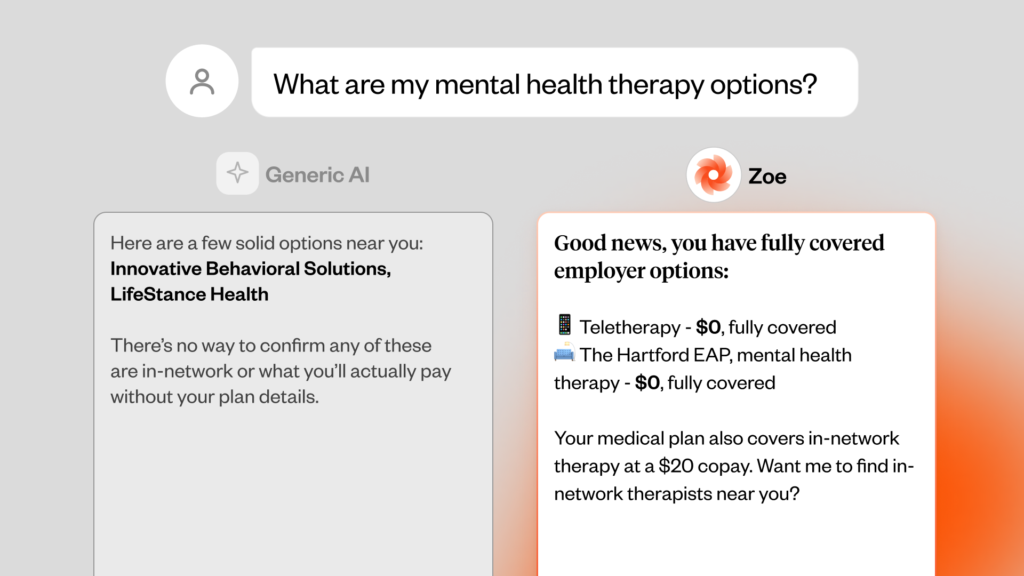
Zoe’s answer is more personalized and sets employees on the right path. In the generic AI scenario, employees are left to navigate the system on their own, often unsuccessfully. They might accidentally book an appointment with an out-of-network doctor, which will cost them more out of pocket and lead to an expensive claim.
With Zoe, they have everything they need to make a good decision after a single interaction. And they can ask questions 24/7/365.
The ROI of getting it right
Every benefits team knows the challenge: you’ve invested significant resources in building a benefits package that genuinely supports your employees. But that investment only pays off if your employees are informed about what coverage they have, where they can access it, and how they can use it.
Benefits literacy directly impacts utilization, employee satisfaction, and your healthcare spend. That literacy doesn’t happen by sharing a long PDF during open enrollment that employees might only read once. It happens through consistent, informative touchpoints. Through plain-language answers to specific benefits questions.
The employees who turn to ChatGPT for answers are looking for clarity and direction. As an HR leader, you have the opportunity to redirect employees to a more reliable source of information with the same ease of use.
Case study: Leading social media company sees $214K claims reduction
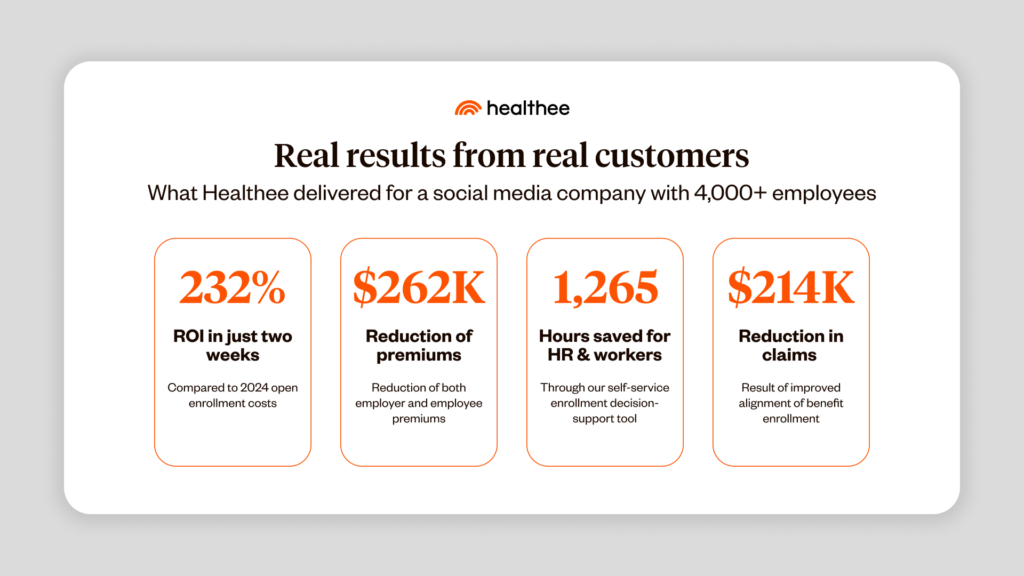
A social media company with over 4,000 U.S.-based employees partnered with Healthee to streamline open enrollment, simplify plan selection, and boost employee engagement. Within just two weeks of implementation, they achieved significant savings.
The company saw a $214K claims reduction, demonstrating our platform’s ability to redirect employees toward low and no-cost care—such as Healthee’s free-to-use telehealth and urgent care (instead of hospital visits).
The bottom line for HR teams
You can’t control what tools employees use in their personal lives. What you can control is what’s available to them at work, and whether the benefits navigation experience you offer is better than what they find on their own.
Zoe isn’t another chatbot layered on top of your existing benefits portal. It’s a purpose-built AI that understands the full picture of your benefits program and connects it to each employee’s individual situation.
You can expect more accurate answers, lower healthcare spend, and a workforce that actually uses the benefits you’ve worked hard to provide. Generic AI can help employees understand healthcare. Zoe helps them navigate it and make better decisions.