I agree to receive transactional SMS messages from Healthee. Msg frequency varies. Msg & data rates may apply. Text STOP to unsubscribe and HELP for help. Privacy PolicyTerms of Use
Open enrollment software lets employees compare and choose benefits on their own, and it automates the reminders, eligibility rules, and record-keeping HR handles each year.
The best tools are judged on three things: how well they guide employees to the right plan, how much visibility and compliance they give HR, and whether pricing scales with your headcount.
For companies with 500+ employees, decision support matters most. Personalized plan comparisons and an accurate AI assistant cut the repetitive questions that drive most of the HR benefits administration workload during open enrollment.
Healthee’s AI open enrollment decision support software, Zoe, absorbs up to 87% of routine benefits questions and saves HR teams an average of 9 hours per week.
Choose open enrollment software based on three things: how well it guides employees to the right plan without HR’s help, how much visibility and compliance it gives HR, and whether its pricing scales as you grow. For mid-sized and enterprise companies, weigh employee guidance most heavily. That means personalized plan comparisons and an AI assistant that gives accurate, plan-specific answers, because that’s where most open enrollment workload comes from.
Do you feel bombarded with repetitive queries during benefits open enrollment? Are you tired of the unending paperwork when updating employees’ benefit plans?
If so, you’re not alone. Most HR staff find the benefits open enrollment season stressful and overwhelming.
More than 82% of HR leaders say open enrollment is a stressful time of year, and 80% say their resources are strained while planning for it, according to GuideSpark.1 Much of that strain is repetitive. Three-quarters of CHROs report their teams spend “a lot of time” just answering employee questions (ADP, citing GuideSpark).1 The right open enrollment software takes that volume off HR’s plate.
Healthee’s AI assistant, Zoe, absorbs up to 87% of routine benefits questions and saves HR teams an average of 9 hours per week.
This guide covers what open enrollment software is, how it reduces HR workload, a “what to look for” checklist for mid-sized and enterprise companies, and answers to the most common buyer questions.
What is open enrollment software?
Open enrollment software is a platform that lets employees review, compare, and choose their benefits during the annual enrollment window. It also automates the reminders, eligibility rules, and record-keeping HR would otherwise handle by hand.
Think of it as a guided checkout for health insurance. Employees don’t have to dig through a 100-page benefits PDF and email HR with questions. They see only the plans they qualify for, compare them side by side, and enroll in one place.
Using open enrollment software means companies will have less paperwork, fewer mistakes, and an easier time keeping track of employees’ chosen plans.
What open enrollment software does
Feature
What it does
What it saves
Eligibility-based plan display
Shows each employee only the plans they qualify for
Prevents ineligible selections and the corrections that follow
Side-by-side plan comparison
Compares premiums, deductibles, and out-of-pocket maximums
Cuts the “which plan should I pick?” questions HR fields every year
AI benefits assistant
Answers plan-specific questions 24/7
Takes routine questions off HR’s queue, including after hours
Automated reminders
Notifies employees of deadlines and plan changes
Removes manual follow-up emails and last-minute enrollment rushes
Enrollment dashboard
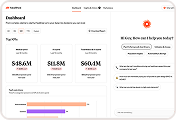
Tracks participation and plan selection in real time
Flags low participation while there’s still time to act
Open enrollment software vs. benefits administration software
Benefits administration software manages benefits year-round, including eligibility, carrier connections, life events, and compliance records. Open enrollment software focuses on the enrollment window itself and on helping employees make their choice. Many platforms combine both, so ask vendors which parts of the enrollment experience they handle directly and which depend on your existing benefits admin system.
What is open enrollment decision support software?
Open enrollment decision support software helps employees pick the right plan for their situation rather than just listing the options. It models expected costs based on how each employee is likely to use care, then recommends the plan that fits. AI decision support adds a conversational assistant that answers plan-specific questions in plain language.
How does open enrollment software reduce HR workload?
Open enrollment software reduces HR workload by handling the four tasks that consume most of the season: answering routine questions, guiding employees to the right plan, catching eligibility errors before they reach payroll, and tracking participation without manual follow-up. For a company with 500+ employees, the right platform can shift most of that work off HR’s desk without adding headcount.
Cut down on repetitive benefits questions
An AI benefits assistant answers plan-specific questions about deductibles, covered providers, and costs at any hour, so employees don’t have to wait for HR to respond.
Healthee’s AI assistant, Zoe, answers in under 27 seconds and absorbs up to 87% of routine benefits questions, which saves HR teams an average of 9 hours per week. That time goes back to the issues that need real professional intervention, like life events, eligibility exceptions, and escalations.
Help employees choose the right plan
Most employees overestimate how well they understand their plans. In the Employee Benefit Research Institute’s 2024 Consumer Engagement in Health Care Survey, nearly 9 in 10 enrollees said they understood their health plan options, but true-or-false questions showed real gaps around out-of-pocket maximums and prescription pricing.2 Half spent less than an hour choosing a plan.
Open enrollment software closes that gap with plain-language benefit breakdowns, side-by-side plan comparisons, and personalized recommendations based on each employee’s expected care. Whether it’s questions around benefit terms, or how much their copay is, employees get to a confident decision faster, and HR fields fewer “which plan should I pick?” questions.
Reduce enrollment errors
Open enrollment software applies eligibility rules automatically, so employees only see and select plans they qualify for. Every election is stored in one system instead of spread across spreadsheets, emails, and paper forms, which makes discrepancies easier to catch and correct before they reach payroll or carriers.
All of the above gives your team confidence in the integrity and value of your open enrollment communications.
Automate and simplify open enrollment for mid-sized and enterprise companies
The same open enrollment software can manage enrollments whether it’s 500 or 50,000 employees without extra HR staff. And every employee gets the same personalized experience.
In one example, a large beverage distributor used Healthee’s decision support across nearly 5,000 employees. 95% of employees completed their enrollment selections through Healthee, spending an average of 9 minutes choosing a plan, and HR admin work dropped by 87%.
What should mid-sized and enterprise companies look for in open enrollment software?
The best software to automate and simplify open enrollment for mid-sized companies guides each employee to the right plan, gives HR real-time visibility and compliance controls, and keeps pricing predictable as headcount grows. Use this OE checklist to evaluate vendors.
1. Employee guidance
An interface employees can use without help. If employees can’t complete enrollment on their own, every confusing screen becomes an HR ticket.
An AI assistant that gives plan-specific answers. Generic chatbots that repeat FAQ pages create more questions. Look for an assistant that reads your actual plan documents and answers based on each employee’s coverage. Healthee’s Zoe answers in under 27 seconds and absorbs up to 87% of routine benefits questions.
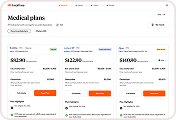
Personalized plan comparison, not just side-by-side charts. A static chart still leaves employees guessing. AI open enrollment decision support software should model expected costs based on each employee’s care needs and recommend a plan. Healthee’s Plan Comparison Tool also checks whether an employee’s doctors and medications are covered, and lets them compare against a spouse’s plan.
Access to a human when needed. Complex situations like life events and dependent eligibility still need a person. Confirm the vendor offers live benefits specialists for escalations.
Multilingual support. At enterprise scale, one plan document rarely fits every employee’s first language.
Year-round use. Tools that only work during open enrollment go unused for 11 months. A software that employees keep using after enrollment, to find providers, check costs, and track deductibles, gets more value from the same rollout.
2. HR visibility, integration, and compliance
Integration with your HRIS and benefits admin system. Ask exactly how elections reach your enrollment system of record. Some open enrollment decision support software hands employees off to your benefits admin platform to finalize enrollment, so the handoff should be clear to employees.
A real-time enrollment dashboard. HR should see participation and plan selection as enrollment happens, so low participation gets flagged while there’s still time to act.
Eligibility rules enforced automatically. Employees should only see plans they qualify for, which prevents corrections after enrollment closes.
HIPAA compliance and a SOC 2 Type II report. HIPAA is a federal requirement for handling protected health information. A SOC 2 Type II report shows a third-party auditor tested the vendor’s security controls over time.
3. Cost and scalability
A clear pricing model. Confirm whether pricing is per employee per month (PEPM), a flat subscription, or a one-time license, and what’s included.
Predictable costs as you grow. Ask how pricing changes if headcount doubles or you add entities, and what upgrades cost.
Measurable time savings. Compare the price against HR hours saved and support tickets avoided. An open enrollment software like Healthee that saves your team 9 hours a week during enrollment, for example, has a calculable return.
Quotes from multiple vendors. Two or three quotes show what your requirements cost on the market.
How to test AI open enrollment decision support software before you buy
Run a pilot with a small group of employees and collect their feedback.
Time common tasks, like comparing two plans or updating a dependent.
Count the clicks needed to finish enrollment. Fewer is better.
Ask the AI assistant hard questions about your actual plans, and check the answers against your plan documents.
Request a reference from a customer with a similar headcount.
Key questions to ask before you buy
Choosing open enrollment software comes down to three questions. Does it guide each employee to the right plan without HR’s help? Does it give HR real-time visibility and meet HIPAA requirements? Will its pricing hold up as you grow?
For mid-sized and enterprise companies, repetitive questions and plan confusion drive the majority of open enrollment workload. The right open enrollment decision support software takes both off HR’s plate.
See how Healthee handles open enrollment →
FAQs
What is AI open enrollment decision support software?
AI open enrollment decision support software uses each employee’s expected care needs, doctors, and medications to recommend the health plan that fits them best, and answers their questions in plain language through a conversational AI assistant.
Standard comparison charts only list plan details. AI decision support explains the tradeoffs for each person. Healthee’s Plan Comparison Tool and AI assistant, Zoe, work this way, and employees using the tool save $1,000 to $2,000 a year in out-of-pocket costs while reducing HR workload by 87%.
What is the best open enrollment software for mid-sized companies?
The best open enrollment software for mid-sized companies combines an AI assistant that answers plan-specific questions, personalized plan comparison, automatic eligibility rules, and a real-time enrollment dashboard, at a price that scales with headcount.
Mid-sized companies often lack a large benefits team, so prioritize tools that reduce question volume and let employees enroll on their own. Healthee, for example, combines all of these in one platform that employees keep using after enrollment closes.
What is the difference between decision support and benefits administration software?
Decision support software helps employees choose a plan. Benefits administration software records and manages their elections after open enrollment ends, including eligibility, carrier connections, and life events. Many companies use both, with open enrollment decision support software guiding the choice and the benefits admin system finalizing enrollment. Ask vendors exactly how the two connect.
How can a 500+ employee company reduce HR workload during open enrollment?
A company with 500+ employees can reduce open enrollment workload by moving routine questions to an AI benefits assistant, guiding plan selection with personalized comparisons, enforcing eligibility rules automatically, and tracking participation in a real-time dashboard instead of chasing employees with an open enrollment email. When a large beverage distributor rolled out Healthee to nearly 5,000 employees, 95% completed their selections through the platform and HR admin work dropped by 87%.
What HR software makes open enrollment easy?
Open enrollment is easiest with software that lets employees enroll without HR’s help. That means a simple interface, a 24/7 AI assistant that answers plan-specific questions, and side-by-side plan comparisons with personalized recommendations. Healthee’s assistant, Zoe, answers benefits questions in under 27 seconds and absorbs up to 87% of routine inquiries, saving HR teams an average of 9 hours per week.
How much does open enrollment software cost?
Open enrollment software is usually priced per employee per month (PEPM), as a flat annual subscription, or as a one-time license, and the cost depends on headcount and features. Get quotes from at least two or three vendors. Ask how pricing changes as you grow, and compare the cost against the HR hours and support tickets the software saves.
See how Healthee can simplify your open enrollment experience