I agree to receive transactional SMS messages from Healthee. Msg frequency varies. Msg & data rates may apply. Text STOP to unsubscribe and HELP for help. Privacy PolicyTerms of Use
Are You Asking the Right Employee Benefits Survey Questions After Open Enrollment?
August 28, 2024
Good enrollment benefits survey questions can delight employees twice. First, when they fill it out and it makes them feel listened to. And then again next year, when open enrollment rolls around and the employee experience is that much better for it.
According to a 2023 MetLife study, “62% of employees say understanding how to use their benefits would give them a greater sense of overall stability while 50% say having a better understanding of their benefits—what’s offered and what’s covered—would make them more loyal.”
But getting the results you want from your post open enrollment survey questions means asking the right things and knowing how to use the data.
What is a post-open-enrollment survey?
An employee benefits survey for OE is a tool HR teams use to gather feedback after benefits enrollment ends. The goal is to understand what worked and what didn’t during the process. Analyzing the insights from this survey helps you improve for the next open enrollment season.
But don’t confuse this with a general employee benefits survey. General employee benefits survey questions focus on the benefits themselves. A post-enrollment survey, on the other hand, is all about the enrollment experience.
The post open enrollment survey questions aim to discover:
How clear was the information?
Was the process easy to navigate?
Did employees feel supported in making decisions?
Do certain employees or employee groups require more help?
The survey is an important part of your open enrollment communications. The feedback you gain from it will guide you to a smoother, more efficient enrollment next year.
Why are employee benefits survey questions so important?
Let’s break down why these post open enrollment surveys are a must-have tool in your HR toolkit.
Provides benchmarking data
You can’t improve what you don’t measure. That’s why it’s so valuable to have a database of feedback collected over time. Each survey creates a new benchmark. It’s a snapshot of how you’re doing right now. So, next year, you’ll be able to compare the open enrollment data to those of years past and discover trends in important things like:
Without these benchmarks, you’re just hypothesizing, at best. But if you have this data, you have proof of progress. Employee benefits survey questions can help you set realistic goals. They show you exactly where to focus your efforts. They also give your team hard numbers to back up your decisions. And, no less important, these open enrollment surveys give you the power to prove the value of HR’s efforts.
Pro tip: Keep the questions and answer options the same each year to make the data comparable.
Improves future open enrollment processes
Asking the right employee benefits survey questions helps you find the blind spots in your open enrollment project plan.
Knowing what works and what doesn’t gives you a clearer view of the holes in your open enrollment system.
It allows you to identify and fix your employees’ pain points. Maybe employees struggled with a particular stage of the open enrollment procedure or felt rushed. Your OE survey questions can help reveal these kinds of issues.
Enhances employee satisfaction and company success
Post open enrollment survey questions do more than just improve processes. They show employees their opinions matter.
And according to a study about The Heard and Heard Nots, “Organizations are much more likely to perform well financially (88%) when their employees feel heard, engaged, and a sense of belonging.” So your survey can boost retention and overall job satisfaction AND improve the bottom line.
Data helps you influence decision makers
The data you collect from employees can show how important it is to them, and by extension, to the company, to make open enrollment smoother. Many of our current customer companies approached us after their employees’ feedback highlighted the need for a better plan comparison tool. This demonstrates how documenting the answers to employee feedback can influence decision makers toward better technological solutions.
Best employee benefits survey questions
Asking the right questions after open enrollment is crucial. It’s the difference between useful insights and wasted effort. So, we’ve pinpointed five types of employee benefits survey questions to target the key areas of open enrollment experience.
We also recommend collecting results on a number scale so that they can be compared and analyzed from year to year.
1. Communication and information delivery questions
Clear communication can make or break your open enrollment. These questions help you gauge the effectiveness of your open enrollment communication strategy, including improvements to make to your open enrollment email template. Here are some sample questions you might want to use:
How clear was the information provided about benefit options?
How much did our communications help you make informed decisions?
How much did you try to read the communications we sent you?
How easy was it to understand the enrollment instructions?
These questions will help you identify opportunities to improve your strategy for next year.
2. Decision-making support questions
Your HR team aims to make choosing benefits easier. These employee benefits survey questions help you see what you’re getting right, and what could use improvement.
How helpful were the resources provided in making your benefits decisions?
How helpful were the tools for comparing benefit options?
How confident did you feel in your final benefits selections?
These questions reveal gaps in your decision support. You might need better open enrollment software, more detailed guidelines, better education on benefits terminology, or personalized support options.
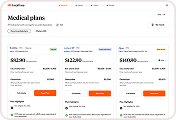
Pro tip: Provide personalized plan suggestions to each employee automatically using AI. Healthee’s AI-powered plan comparison tool does all of the grunt work for you.
3. Timeliness questions
Timing is everything in open enrollment. These questions help you gauge if your timing was on point.
Did you have enough time to review your benefit options?
How promptly were your questions or concerns addressed?
Was the enrollment period long enough for you to make informed decisions?
This will tell you if your timeline worked for your employees. Use this feedback to know if you need faster response times, earlier information rollout, or a better technological solution.
4. Accessibility questions
These questions help you understand if employees could find what they needed when they needed it.
Here are three sample questions to ask:
How easy was it to find the information you needed about your benefits options?
How helpful was the plan selection tool to you (if your company uses one)?
Did you encounter any technical issues during the enrollment process? If so, please explain.
These employee benefits survey questions show if your resources and technologies were user-friendly. This gives you insight if you need a better online portal, mobile-friendly options, or better tech support during enrollment.
5. Open-ended questions
Some of the best insights come from free-form responses. These questions let employees share their thoughts freely. They may share things you wouldn’t have considered.
What was the most challenging part of the enrollment process for you?
What one thing would you change about open enrollment next year?
Is there anything else you’d like to share about your enrollment experience?
Open-ended post open enrollment survey questions capture unique perspectives. Use these responses to spot unexpected opportunities for improvement.
Pro tip: Place these at the end of your survey so that employees have had time to reflect on their full experience.
Aim for a survey that takes 5 minutes or less. This keeps employees engaged because they’re more likely to finish a short survey. Plus, it forces you to focus on what really matters – every open enrollment survey question should have a clear purpose.
Keep questions the same each year
It’s vital to keep your questions the same each year so that the data can be compared. Imagine if one year, a question says, “How satisfied are you with the open enrollment experience on a scale of 1 to 10,” and the next year, the question says, “Were you happy with the open enrollment experience this year?” The answers couldn’t be compared or analyzed from year to year. So be sure to ask the same questions with the same answer options each year.
Of course, not all of the employee benefits survey questions need to be the same each year, just the ones you want to be able to compare and analyze over time.
Provide clear instructions
Confusion leads to inaccurate responses.
Keep your instructions simple. For example, instead of saying, “Please indicate your level of agreement with the following statements,” try, “Tell us how much you agree or disagree with each of the following statements.”
Ensure anonymity
People tend to filter their responses when they feel like they’re being watched. This can skew your results.
That’s why it’s important to make your survey anonymous. Here’s how you do it:
Don’t ask for identifying information like names or employee IDs.
Use a third-party survey tool that doesn’t track respondents.
Clearly state in the survey intro that all responses are anonymous.
When employees know their responses won’t be traced back to them, they’re more likely to be honest.
There is one problem, though. If you can’t track who fills out the survey, you won’t be able to see who really needs help. The best solution is to use a 3rd party survey tool that doesn’t reveal individual identities but can provide aggregated data on areas where support is needed. This way, you maintain anonymity while still identifying trends and areas for improvement.
So, you need to explain how their answers to the employee benefits survey questions directly shape the next open enrollment. Tell them their opinions can make the process smoother for everyone.
How to analyze the data
If possible, parse the aggregate data according to your employee personas. This means identifying whether different groups, such as those based on age, race, gender, education level, department, or location, have varying needs or experiences.
If there were major differences this year compared to last year’s data, what could have caused them? And if it was because you implemented better processes or programs this year, that’s worth making people aware of.
To sum it up
Well-crafted employee benefits survey questions delight employees not just once, but twice—first, when they feel heard, and again when they see improvements in the next enrollment period.
Getting meaningful results from your survey means asking the right questions and leveraging the data effectively. And if you really want to take your enrollment process to the next level, consider using a solution like Healthee.
Healthee makes it simple for employees to compare plans during open enrollment and navigate their benefits the rest of the year. Find out how Healthee is Helping HR Leaders