I agree to receive transactional SMS messages from Healthee. Msg frequency varies. Msg & data rates may apply. Text STOP to unsubscribe and HELP for help. Privacy PolicyTerms of Use
Health insurance brokers for small business: 4 signs you made the right choice
The Healthee Brief
January 16, 2026
Health insurance is one of the most important investments an organization will make. And if you’re a small business, navigating that investment can feel especially complex.
With fewer internal resources and limited negotiating power, dealing with health insurance benefits quickly becomes overwhelming. Rising costs, tricky compliance rules, and evolving employee expectations only add to the pressure.
That’s where the right health insurance brokers for small businesses come in. Not just to quote plans, but to serve as your advisor, guide, and strategic partner.
But how do you know if a broker is actually the right fit?
Whether you’re evaluating your current partner or exploring options for the first time, here are four clear signs you’ve found a broker who’s truly aligned with your business needs — now and for the long haul.
Why small businesses need a health insurance broker
Offering health insurance is no longer optional if you want to attract and retain great talent, even as a smaller employer. But plan selection, contribution strategies, compliance, and employee education all add up to a heavy lift.
For small businesses without a full-time benefits expert on staff, a broker can help fill that gap with the knowledge, resources, and support your team needs. They bring the expertise and market access needed to help you build a plan that fits your budget, your workforce, and your growth goals. A survey showed that about 88% percent of small employers purchased or renewed their employer-sponsored health insurance through an agent or broker.¹
And as employee expectations rise — with more demand for personalization, digital access, and mental health support — having a broker who can help you adapt quickly is a necessity.
What a broker actually does for small businesses
A common misconception is that brokers simply help you pick a health plan once a year.
In reality, the right broker serves as an embedded partner. One that supports your HR, finance, and leadership teams in building a benefits strategy that aligns with your organization. They provide professional guidance not just on cost, but on how your plan design supports retention, compliance, and long-term progress.
Beyond selecting plans, a strong broker helps you think ahead. They bring market insights, advocate for your business during renewals, and help you adapt as your needs evolve — whether that means exploring self-funding, evaluating new point solutions, or responding to regulatory changes.
Most importantly, they show up year-round (not just at open enrollment), acting as a steady resource in a benefits landscape that rarely stays still.
The top benefits of working with a broker
Before we dive into the four signs you’ve found a great health insurance broker for small businesses, it’s worth highlighting some of the core advantages:
Cost savings
As healthcare spending continues to climb, managing costs will be a top priority this year. A broker helps control spend through smarter plan design, better carrier selection, and active negotiation on your behalf.
Time efficiency
By managing enrollment, vendor coordination, and employee questions, brokers significantly reduce HR’s workload throughout the year.
Plan renewals
Brokers give you access to multiple carriers and provide side-by-side comparisons so you can make informed plan renewal decisions with confidence.
Ongoing support
A strong broker supports you year-round by helping resolve claims issues, educating employees, and navigating compliance requirements.
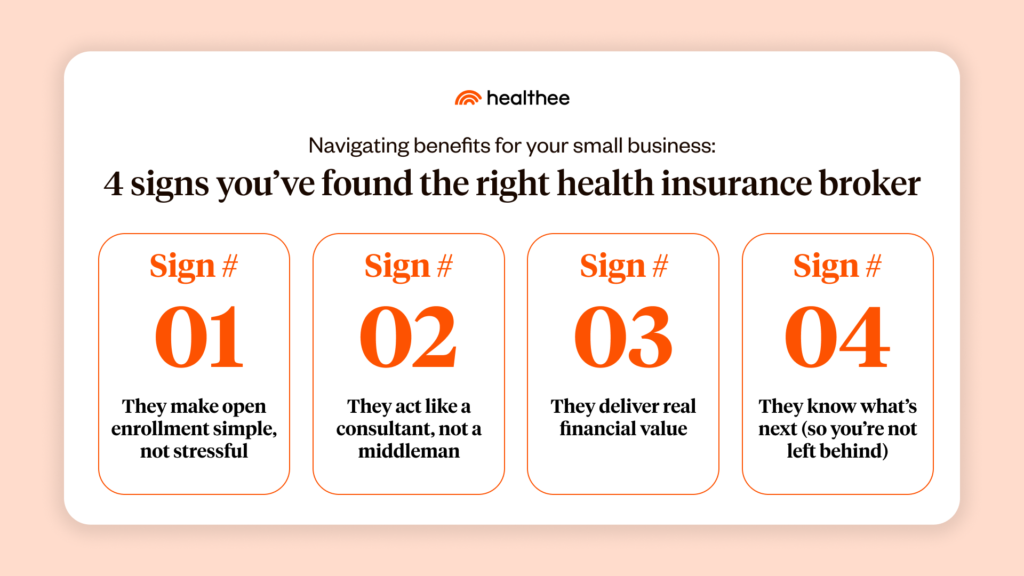
4 signs you’ve found the right health insurance broker
Sign #1: They make open enrollment simple, not stressful
For many small businesses, open enrollment (OE) is one of the most time-consuming (and high-stakes) periods of the year. A strong broker removes the guesswork and helps you avoid costly errors.
Here’s what that looks like in action:
Clear, jargon-free communication for employees
Educational materials and decision support tools that match your workforce
Accurate plan setup and eligibility management
Fewer repetitive questions landing in HR’s inbox
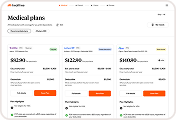
The best brokers also bring tech to the table that can make OE a breeze. For example, platforms like Healthee include a Plan Comparison Tool (PCT) that helps employees evaluate their options based on real-life scenarios, such as how often they see the doctor or whether they’re managing a chronic condition.
This level of guidance reduces confusion, boosts satisfaction, and can even lower overall claims costs.
Sign #2: They act like a consultant, not a middleman
A good broker will quote rates. A great broker will help you think long-term.
The right partner will bring a consultative approach to your benefits. They’ll look not just at what you need now, but where your business and workforce are headed. That includes:
Forecasting future claims trends and cost increases
Helping you evaluate whether self-funding or level-funding could work
Bringing in wellness or mental health programs to improve employee outcomes
Advising on risk management strategies that protect your business from unexpected claims spikes
In short, they’re not just executing your strategy. They’re helping shape it.
Sign #3: They deliver real financial value
Health benefits aren’t cheap. A recent Gusto report showed that the median health insurance premium for small businesses in America has risen 23% since 2022, outpacing inflation by 13% over the period.²
But with the right broker, you can get more value from every dollar you spend.
This means:
Strong carrier relationships that lead to better rates or added perks
Ability to bundle medical, dental, vision, and voluntary benefits for better efficiency
Data-driven recommendations that help reduce overuse or underuse of services
Support with cost-containment strategies, from pharmacy benefits to specialty care navigation
When brokers work with Healthee, their clients have access to a wide range of cost-saving opportunities. For example, Healthee helped a global technology manufacturing company identify over $10.6 million in suspicious claims from 2025 through our AI-powered fraud, waste, and abuse (FWA) team.
While your broker might not offer tech like this directly, they should be aware of solutions that make this kind of savings possible and be eager to bring them to the table.
Sign #4: They know what’s next (so you’re not left behind)
Your benefits strategy needs to evolve just as fast as the healthcare market, and your broker should help you stay ahead.
The right partner is bringing fresh ideas to the table before you even ask, such as:
AI-powered plan-matching tools for smarter enrollment
Digital-first benefits education and navigation
Personalized portals that make it easy for employees to access what they need
Analytics tools that surface trends and cost drivers
Guidance on integrating point solutions without overwhelming your team
A recap: How to choose the right health insurance brokers for small business
At this point, you have a pretty solid idea of what makes a broker stand out.
Here’s an overview of what we recommend looking out for as you evaluate your options:
Experience with businesses of your size and in your industry: A broker who understands the realities of small business operations, and has experience serving similar companies, will be better equipped to offer relevant, right-sized solutions.
Access to multiple carriers and plan types: Your broker should bring a range of options to the table, not just one or two plans. This ensures you’re getting competitive pricing and can customize your benefits to meet the needs of your workforce.
Transparency around fees, commissions, and incentives: A trustworthy broker will clearly explain how they’re compensated and disclose any carrier incentives, so you know they’re prioritizing your needs.
A tech-forward approach that includes decision support and employee education: Look for brokers who integrate with digital tools that simplify open enrollment, improve plan selection, and help employees make smarter choices throughout the year (without putting extra strain on your HR team).
A long-term mindset focused on outcomes, not just renewals: The best brokers think beyond the annual plan cycle. They help you forecast, adapt, and continuously improve your benefits strategy based on real data and your company’s evolution.
If a broker can’t clearly explain how they’ll help you evolve and improve your benefits strategy over time, it may be a good idea to revisit whether the partnership still aligns with your goals.
Offer big-company benefits with confidence
Small businesses shouldn’t have to compromise when it comes to benefits. With the right broker by your side, you can build a competitive, cost-effective, and intuitive health plan that keeps your employees happy and your budget intact.
Want to learn more about platforms like Healthee that can help you and your broker simplify open enrollment, reduce costs, and support employees year-round? Let’s talk!
Why does a small business need a broker instead of going directly to an insurance carrier?
Working directly with a carrier limits your options, and you’ll often end up paying more. A broker brings access to multiple carriers, negotiates better rates, and helps you design a plan that fits your budget, workforce, and long-term goals. For small businesses without in-house benefits expertise, a broker becomes your go-to advisor.
What should I expect from my broker beyond open enrollment?
Open enrollment is just the start. The right broker supports you year-round, helping resolve claims issues, managing vendor coordination, advising on compliance, and keeping you ahead of benefits trends.
How can a broker help us reduce healthcare costs without cutting coverage?
A strong broker uses market insights, carrier relationships, and data analysis to find savings opportunities. That can include anything from smarter plan design to cost-containment strategies like pharmacy management or wellness initiatives.
How does a platform like Healthee support the broker relationship?
Healthee complements your broker by giving employees the tools they need to actually understand and use the plans your broker helps you choose. From personalized plan comparisons to AI-powered support that answers benefits questions 24/7, Healthee makes benefits easier to navigate year-round. A great broker will recognize the value of platforms like this and help you integrate them into your overall strategy.